
SEG - North America Honorary Lecture, Gerard Schuster
Register
Event Details
 "The Good, the Bad, and the Ugly
with AI in Geosciences"
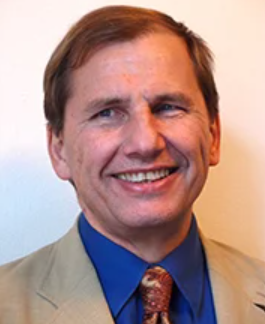
Gerard Schuster, 2026 North America Honorary Lecturer
Tuesday, December 1, 2026 | UTD, Dallas
SEG would like to invite you to join them on their 2026 North America Honorary Lecturer tour with Gerard Schuster from the University of Utah! He will be giving his lecture at UT Dallas at 4pm for anyone who would like to join. The lecture is 1 hour and free for all to attend! Please register to see full event details & logistics:
Register here: https://seg.org/education/lectures/seg-honorary-lecture-gerard-schuster/
Talk Details
Speaker: Gerard Schuster, University of Utah
Title: "The Good, the Bad, and the Ugly with AI in Geosciences"
Artificial Intelligence (AI) is rapidly transforming geosciences, from seismic interpretation and reservoir characterization to mineral exploration and climate modeling. This presentation examines some of the promises and pitfalls of AI in geosciences through a balanced lens: the good, the bad, and the ugly.
The good highlights AI’s capacity to extract subtle patterns from high-dimensional geophysical data, accelerate interpretation workflows, improve fault and horizon detection, enhance AVO classification, rapidly create geoscience labs (see Figure 1) and learning materials, and enable real-time decision-making. Machine learning models, particularly deep neural networks, can outperform traditional deterministic methods when trained on large, well-curated datasets, offering increased efficiency and reproducibility. I show how physics-informed machine learning, such as autoencoder wave-equation inversion or principal-component wave-equation inversion (see Figure 2), can outperform some early-arrival wave-equation inversion methods.
The bad is that AI methods can fall victim to overfitting, data bias, lack of uncertainty quantification, and the misuse of black-box models without physical constraints. Many AI models produce impressive predictions but fail when applied outside their training distribution. Poor validation practices, data leakage, and unbalanced training datasets can lead to overconfident results.
The ugly confronts deeper issues: interpretability challenges, ethical concerns, reproducibility gaps, and the erosion of physical intuition when models are used as substitutes rather than complements to geologic reasoning. Without integration of rock physics, wave propagation physics, and domain expertise, AI risks becoming a sophisticated curve-fitting tool rather than a scientific advancement. Perhaps the most concern of some is that important aspects of, e.g., interpreters, project/strategy planning, or code generation, can be more efficiently accomplished by large language models. Thus, many professional jobs will be replaced by AI, and there will be fewer professionals to oversee the final product.
The talk provides examples of the good, bad, and ugly with AI adoption in geosciences—emphasizing physics-informed machine learning, examples of significant improvement in geoscience education, rigorous validation, uncertainty quantification, and integration with established geophysical theory. When grounded in domain knowledge, AI becomes not a replacement for geoscientists but a powerful amplifier of their expertise. For some geoscience educators, AI is becoming a Renaissance in training the next generation of geoscientists.
Speaker Biography
Gerard Schuster is currently a research professor at University of Utah. He was the founder and director of the Utah Tomography and Modeling/Migration consortium from 1987 to 2009, and was the co-director and founder of the Center for Fluid Modeling and Seismic Imaging at KAUST. Schuster helped pioneer seismic interferometry and its practical applications in applied geophysics through his active research program and through his extensive publications, including his book “Seismic Interferometry” (Cambridge Press, 2009). He also has extensive experience in developing innovative migration and inversion methods for both exploration and earthquake seismology.
Gerard has an MS (1982) and a PhD (1984) from Columbia University and was a postdoctoral researcher there from 1984–1985. From 1985 to 2009 he was a Professor of Geophysics at University of Utah. He left Utah to start his current position as Professor of Geophysics at KAUST in 2009. He received a number of teaching and research awards while at University of Utah. He was editor of Geophysics from 2004–2005 and was awarded SEG’s Virgil Kauffman Gold Medal in 2010 for his work in seismic interferometry, and awarded SEG’s Honorary Member by SEG in 2025.
SEG published Gerard’s book Seismic Inversion in late 2017 and Machine Learning Methods in Geoscience in 2024. He left KAUST in January 2022 and has returned to the University of Utah as a Research Professor in the Geology and Geophysics Department. He is active in teaching seismic exploration and ML courses around the USA and the world, and his current research interests are for developing innovative ML and geophysical imaging methods.